Vaccinium myrtillus <br>COMMON BILBERRY, EUROPEAN BLUEBERRY
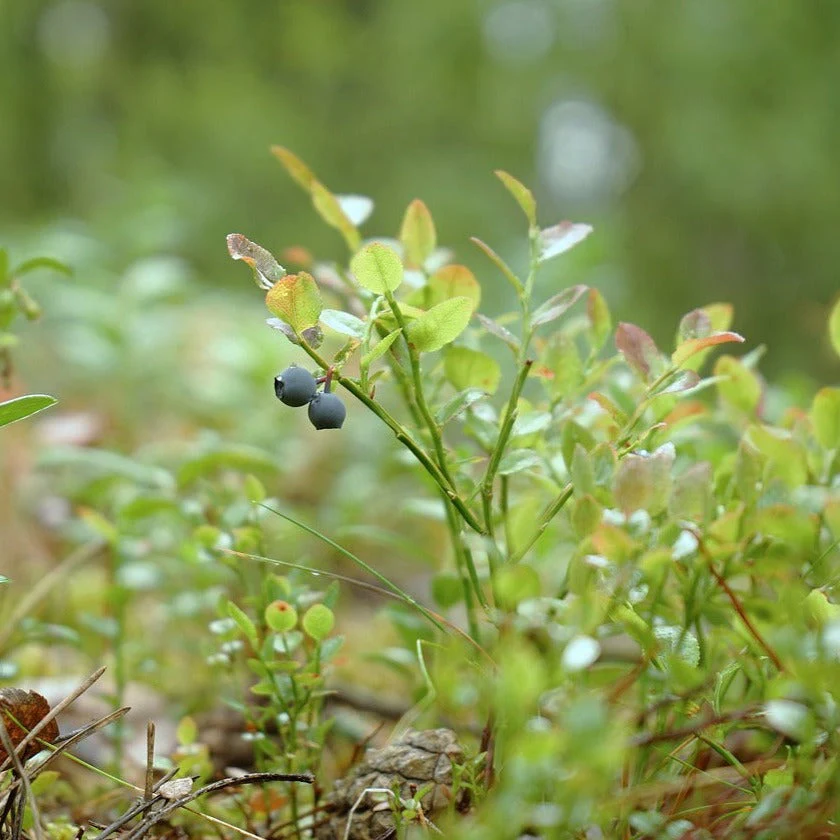
accinium myrtillus or European blueberry is a holarctic species of shrub with edible fruit of blue color, known by the common names bilberry, blaeberry, wimberry, and whortleberry. It is more precisely called common bilberry or blue whortleberry to distinguish it from other Vaccinium relatives.
Vaccinium myrtillus is a small deciduous shrub that grows 4-18 in (10-46 cm) tall. It has light green leaves that turn red in autumn.
Vaccinium myrtillus is native to continental Northern Europe, the British Isles, north and central Asia, Japan, Greenland, Iceland, Western Canada, and the Western United States. It occurs in the acidic soils of heaths, boggy barrens, degraded meadows, open forests and parklands, slopes, and moraines. Bilberry seems to be unaffected by climate change.
In cooking, the bilberry fruit is commonly used for pies, tarts and flans, cakes, jams, muffins, cookies, sauces, syrups, juices, and candies.
Although bilberries are in high demand by consumers in Northern Europe, the berries are harvested in the wild without any cultivation.
Type: Perennial
Hardiness zones: 3-8
Location: Full sun to part shade
Height: 45cm, 18"
Seeds per packet: 50
Product Information
Product Information
Shipping & Returns
Shipping & Returns
Description
accinium myrtillus or European blueberry is a holarctic species of shrub with edible fruit of blue color, known by the common names bilberry, blaeberry, wimberry, and whortleberry. It is more precisely called common bilberry or blue whortleberry to distinguish it from other Vaccinium relatives.
Vaccinium myrtillus is a small deciduous shrub that grows 4-18 in (10-46 cm) tall. It has light green leaves that turn red in autumn.
Vaccinium myrtillus is native to continental Northern Europe, the British Isles, north and central Asia, Japan, Greenland, Iceland, Western Canada, and the Western United States. It occurs in the acidic soils of heaths, boggy barrens, degraded meadows, open forests and parklands, slopes, and moraines. Bilberry seems to be unaffected by climate change.
In cooking, the bilberry fruit is commonly used for pies, tarts and flans, cakes, jams, muffins, cookies, sauces, syrups, juices, and candies.
Although bilberries are in high demand by consumers in Northern Europe, the berries are harvested in the wild without any cultivation.
Type: Perennial
Hardiness zones: 3-8
Location: Full sun to part shade
Height: 45cm, 18"
Seeds per packet: 50