Asclepias purpurascens, purpurea <br>PURPLE MILKWEED
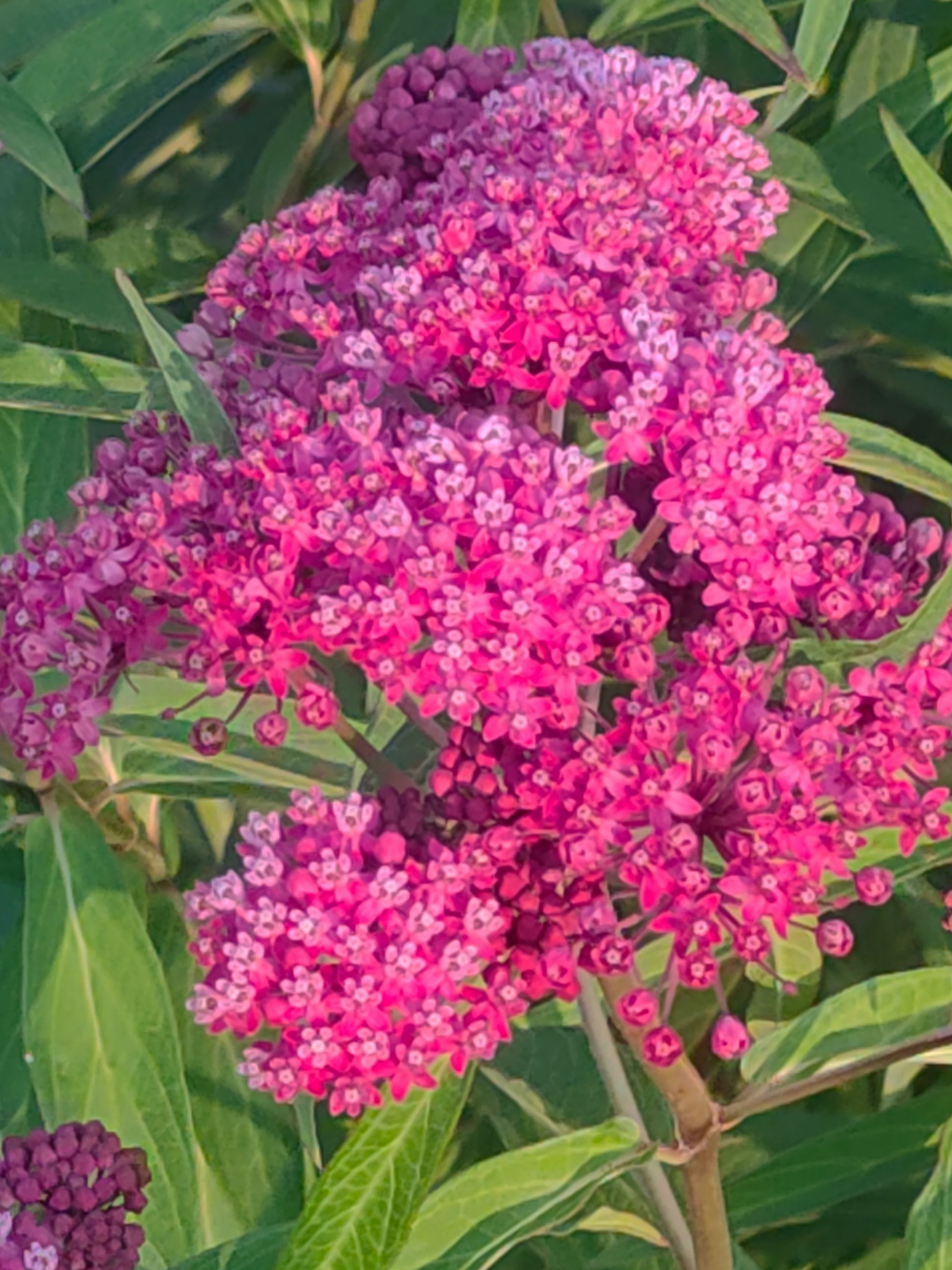
Asclepias purpurascens, the purple milkweed, is native to the Eastern, Southern and Midwestern United States. The plant gets its name from the flowers that first develop a pink color but then turn darker purple as they mature. Unlike common milkweed, purple milkweed prefers some shade and is considered a plant of partial shade.
It is listed endangered in Massachusetts and Wisconsin, as historical to Rhode Island, and as a special concern species in Connecticut and Tennessee.
Like other members of the milkweeds, several insects live off the plant, including the monarch butterfly (Danaus plexippus), the milkweed beetle (Tetraopes tetraophtalmus), large milkweed bug (Oncopeltus fasciatus), small milkweed bug (Lygaeus kalmii) and milkweed leaf beetle (Labidomera clivicollis).[citation needed] Other insects and pollinators feed off the flower's nectar.
This species is cultivated in gardens designed to attract butterflies and other pollinators.
Type: Hardy perennial
Hardiness zones: 3-8
Height: 24-36", 60-90cm
Location: Shade or part sun
Seeds per packet: 10
Product Information
Product Information
Shipping & Returns
Shipping & Returns
Description
Asclepias purpurascens, the purple milkweed, is native to the Eastern, Southern and Midwestern United States. The plant gets its name from the flowers that first develop a pink color but then turn darker purple as they mature. Unlike common milkweed, purple milkweed prefers some shade and is considered a plant of partial shade.
It is listed endangered in Massachusetts and Wisconsin, as historical to Rhode Island, and as a special concern species in Connecticut and Tennessee.
Like other members of the milkweeds, several insects live off the plant, including the monarch butterfly (Danaus plexippus), the milkweed beetle (Tetraopes tetraophtalmus), large milkweed bug (Oncopeltus fasciatus), small milkweed bug (Lygaeus kalmii) and milkweed leaf beetle (Labidomera clivicollis).[citation needed] Other insects and pollinators feed off the flower's nectar.
This species is cultivated in gardens designed to attract butterflies and other pollinators.
Type: Hardy perennial
Hardiness zones: 3-8
Height: 24-36", 60-90cm
Location: Shade or part sun
Seeds per packet: 10