Phlox divaricata <br>WILD BLUE PHLOX
Phlox divaricata, the wild blue phlox, woodland phlox, or wild sweet william, is native to forests and fields in eastern North America.
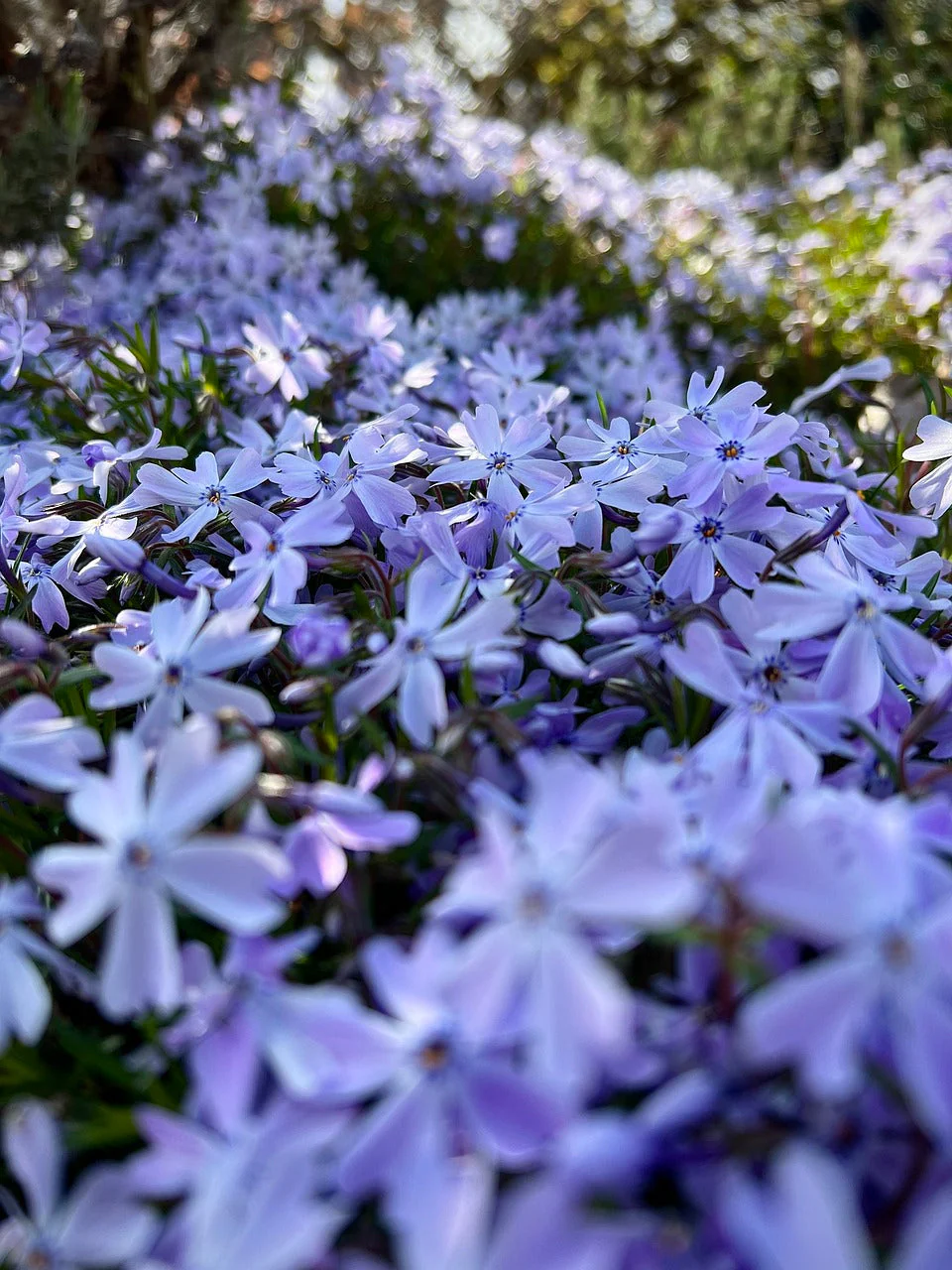
This outstanding phlox gently grows to form large clumps that become covered in masses of brilliant blue flowers! Plants do best in part shade or shade, and become a permanent perennial focal point in the garden. Does well planted below trees.
Wild blue phlox is a semi-evergreen perennial growing 10-20" tall. Flowers appear in late spring and early summer. They are pleasantly fragrant and 1-1.5" in diameter, with five petals fused at the base into a thin tube. The petals are a variety of pastel colors, generally blue-lavender, and could include light purple, pink, or white. Flowers bloom March to May. It grows in moist, deciduous woods and bluffs.
Wild blue phlox is most common in the climax successional stage of a community. The flowers produce nectar at the base of the long, narrow corolla tube, and pollen near the end of the corolla tube. It is food to various butterflies, moths, skippers, and long-tongued bees.
Type: Hardy perennial
Hardiness zones: 4-9
Height: 12", 30cm
Location: Shade or part sun
Seeds per packet: 15
Product Information
Product Information
Shipping & Returns
Shipping & Returns
Description
Phlox divaricata, the wild blue phlox, woodland phlox, or wild sweet william, is native to forests and fields in eastern North America.
This outstanding phlox gently grows to form large clumps that become covered in masses of brilliant blue flowers! Plants do best in part shade or shade, and become a permanent perennial focal point in the garden. Does well planted below trees.
Wild blue phlox is a semi-evergreen perennial growing 10-20" tall. Flowers appear in late spring and early summer. They are pleasantly fragrant and 1-1.5" in diameter, with five petals fused at the base into a thin tube. The petals are a variety of pastel colors, generally blue-lavender, and could include light purple, pink, or white. Flowers bloom March to May. It grows in moist, deciduous woods and bluffs.
Wild blue phlox is most common in the climax successional stage of a community. The flowers produce nectar at the base of the long, narrow corolla tube, and pollen near the end of the corolla tube. It is food to various butterflies, moths, skippers, and long-tongued bees.
Type: Hardy perennial
Hardiness zones: 4-9
Height: 12", 30cm
Location: Shade or part sun
Seeds per packet: 15